


Wall Stone Factory Production: From Raw Stone to Finished Products
Wall Stone Factory Production
Wall stone factory production involves a series of processes that transform natural stone into finished products for residential, commercial, architectural, and landscaping projects.
Understanding how wall stone is produced can help importers, contractors, architects, and distributors evaluate suppliers and make better purchasing decisions.
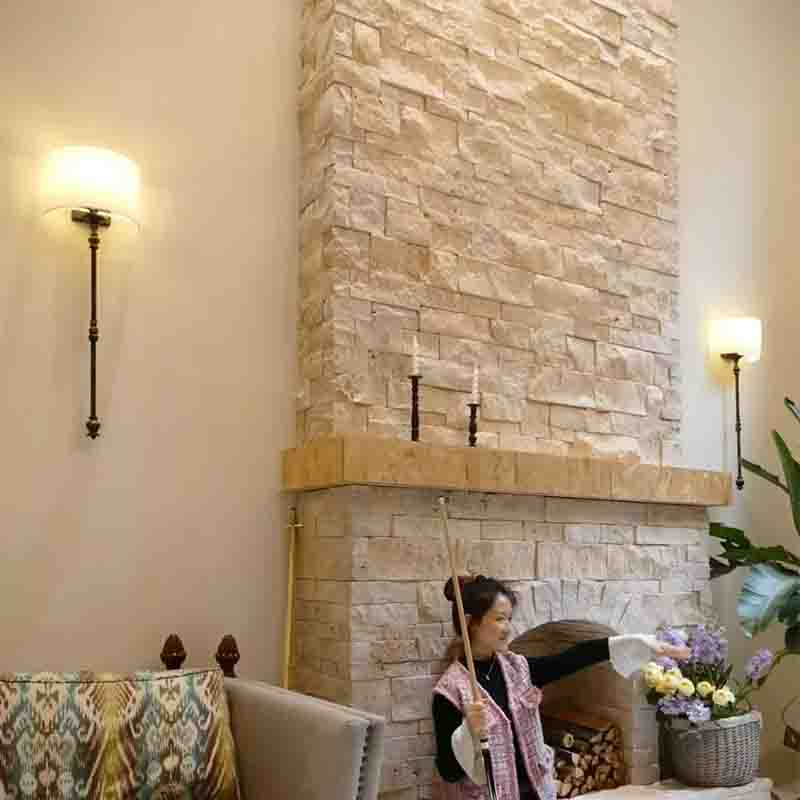
1. Raw Stone Selection
Production begins with selecting suitable natural stone.
Depending on the product range, a factory may work with slate, sandstone, limestone, quartzite, granite, or other natural stones.
The raw material is selected according to:
Color
Texture
Hardness
Thickness
Natural patterns
Intended application
Consistent raw material selection is important for maintaining product quality.
2. Stone Cutting and Splitting
Large blocks, slabs, or rough stone pieces are processed into smaller pieces.
Depending on the desired product, factories may use cutting, splitting, sawing, trimming, or other processing methods.
Natural wall stone can be produced in regular rectangular formats or irregular shapes.
3. Surface Processing
The surface treatment determines the final appearance of the wall stone.
Common finishes may include:
Natural split face
Sawn surface
Chiseled surface
Tumbled finish
Brushed finish
A natural split surface can highlight the geological texture of the stone, while processed surfaces can provide a more controlled appearance.
4. Sorting and Grading
After processing, stones are sorted according to size, thickness, color, and quality.
Sorting is particularly important for wall stone because customers may require a specific appearance for an entire project.
5. Quality Inspection
Before packaging, the factory should inspect the finished products.
Typical inspection points include:
Dimensions
Thickness
Surface quality
Color
Edge condition
Breakage
Quantity
Natural stone contains inherent variations, so quality standards should distinguish between acceptable natural variation and actual product defects.
6. Packaging
Finished wall stone is then packed for storage or transportation.
Depending on the product, packaging may include cartons, pallets, wooden crates, or protective materials.
For export orders, packaging must be designed to reduce damage during handling and long-distance transportation.
7. Container Loading
For international orders, the factory loads finished products into containers according to the agreed packing configuration.
Efficient loading is important because natural stone is heavy and transportation costs can represent a significant part of the total purchase cost.
Conclusion
Wall stone factory production involves much more than simply cutting natural stone.
Raw-material selection, processing, sorting, inspection, packaging, and loading all influence the quality and final cost of the product.
For buyers, understanding the production process is a useful way to evaluate whether a wall stone factory is capable of supplying consistent products for long-term projects.